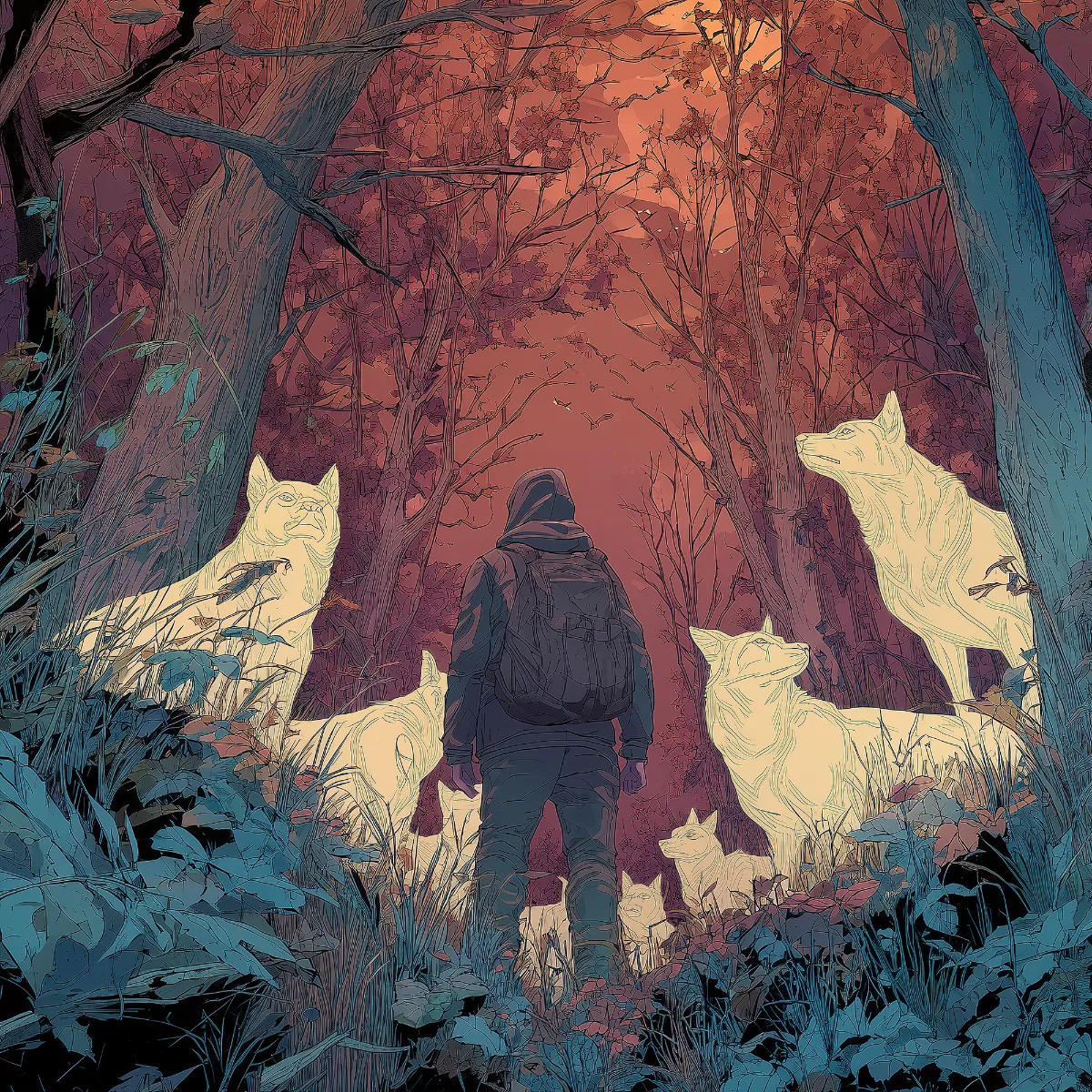
ACT I: My Dogs My Why to Live
I was reading my medical file from 2024 when I stumbled on a quote by my then girlfriend. She said in a private conversation to my therapist that I was suicidal and that in the past she and my dogs were keeping me from ending my own life. Now she sensed that I did not trust her anymore after two decades of a relationship, the only thing that, according to her, was preventing my suicide, the only thing that kept me safe, were my dogs. Yet, two days later, she left and took my dogs. I do not understand this to this day. Why would you do this?
I'm still trying to work out the logic on that one. It's like telling someone the parachute is the only thing keeping them alive, then stealing the parachute mid-flight. This essay is about what happens when the only beings who make life bearable are treated as removable objects.
She was right though, because the only ones I still trust are my dogs. Everyone else eventually looks at me like I'm a broken toaster, as if I'm failing at a game I do not know how to play. But my dogs? They just see me as me. I would do anything for them. I would risk my life for my dogs, and even when my life is inherently awful, I will continue to keep living. Nietzsche once said that he who has a why to live can bear almost any how. My dogs are my 'why to live' and I would have found a how, I always have. I love my dogs beyond imagination.
He who has a why to live for can bear almost any how.
Two years earlier, I experienced a mental breakdown. In my brain, the hamster fell off the wheel completely, launched itself into oncoming traffic, and exploded on impact. It was not pretty and also difficult for the rest of my pack. The reason was that my dog Jura died. She was my best friend. Now, three years later, I still expect to see her sometimes. It feels like losing her again every f*cking time, it’s cruel, it’s awful. Having a near perfect memory is a curse.
In hindsight, if I'd allowed myself to let go of trying to be normal, to fit in, and actually listened to my inner voice screaming: "You need to sit the f*ck down in the woods for a while with your dogs and come to your senses," my brain would have rebooted, I am sure. But I felt too confused at the time, so I tried to do what I thought was expected: act normal, grieve like a normal person.
Now I know of course, I had been masking all my life. I could mask most nonsense, but masking grief is outright impossible and can break stuff on the inside.
Autistic people grieve differently, there are books written specifically on that topic, because we experience the world differently. I remember the woman in charge of my dog's cremation stroking Jura's dead body. My blood boiled. What made it worse was that she said my dog lived a good life and was "in a better place now." What the fuck does that mean you stupid b*tch!? I don't think she noticed she was dangerously close to becoming the crematorium's next client.
The pain didn't lessen over time. Months passed, I just missed her more. I wanted to scream for hours, take a breath, and scream for hours more. At the time, I was sure if I let out my feelings I'd be institutionalized that same day, and maybe I would have.
Suppressing this, however, was one of the worst decisions I've made in my life. Punching some walls would have been the better option, I've come to understand. Recently, I decided to respond to my gut feeling and scream for hours into a pillow. The first time, I admit, I could barely manage ten minutes before my body gave out. I felt so much cleaner and lighter.
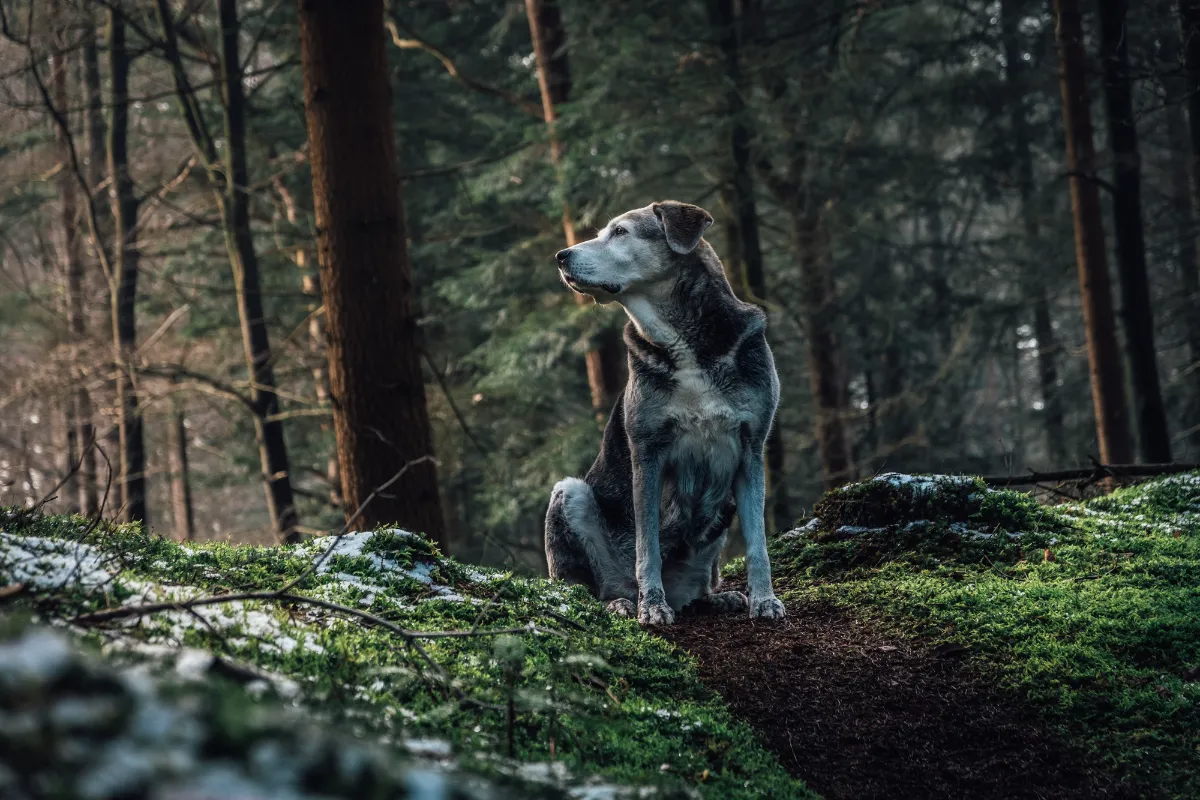
I also started writing down my still raging thoughts. Since I didn't want to be an old man yelling at clouds, I decided to write letters to God, as a non-religious autistic, which I realize is already absurd. The result was a disturbing psychotic mess of me cursing at the Great Impotent Deity in the sky. But somewhere around letter three, something shifted. I wasn't angry anymore, because I was having a conversation with myself. I found my grief was still horrible but I let go of the idea that it should lessen over time, that there's some timer that makes loss hurt less. I'm sure my letters ruined my chances of getting into heaven, but I also stopped feeling like I was drowning in despair.
I've written a far more coherent semi-fictional short story based on these letters which I'll publish soon. It's less blasphemous, I promise.
ACT II: Before the Law
I always had the feeling that I was expected to follow rules no one had explained to me. Also, I think people have been confused by how I process situations differently. I navigate extremely stressful situations easier than most, but when it’s a pack member, or myself, I struggle, I struggle a lot. Sometimes this confusion turns into accusation. People sense something is off, decide I've done something wrong, but I can't understand what. This exact dynamic is at the heart of The Trial by my favorite author of all time, Franz Kafka.
I'm going to spoil it: it's about a man called K who is being accused of something. He does not understand what he did wrong. The whole book is about his legal battle, but he never finds out what he's being accused of. In the end, K is sentenced to death. When he's executed, the infamous last sentence reads: "'Like a dog!' he said, it was as if the shame of it should outlive him."
'Like a dog!' he said, it was as if the shame of it should outlive him."
Kafka famously said that if you want to know him, you just have to read his books. A century later, scholars unanimously agree that he was autistic. Is this why I love all of his writing, the absurdity of living, the ridiculousness of existing in this world? In relation to The Trial, the fact that I'm accused and punished for something I just do not understand feels very familiar. I still do not understand why she took my dogs from me after saying those same dogs were keeping me safe. The math ain’t mathing.
My day-to-day experience in the strange workings of the human world is why I love my dogs more than anything. In a world of unspoken rules and punishments I do not understand, they're the only relationship that makes sense to me. They protect me from going insane and I protect them from going sane.
ACT III: Of Wolves and Men
I still have our oldest dog Mahru, but like me, she’s been cut off from the pack. Over the years we’ve spent countless hours on the trails, and even now, at eleven years old, we spend our days outside in the woods mostly. We're together 24 hours a day, 7 days a week, and I consider our bond extraordinarily strong. Mahru and I, and recently our cat Sir Harry, form an odd pack.
I don't believe you can have a deep relationship with your dog when you only do walkies around the block and have a life besides the life with your pack. I know this offends people. Some have argued against me that they have a job to go to. That's understandable, but it doesn't change the reality. Having valid reasons for leaving your dog alone doesn't change the fact that you're leaving your dog alone.
I've held this position all my life, which has not made me popular in the dog community. I used to be a professional in the dog world for a decade, and if I learned anything, it's that people who treat their dogs well are generally not part of that world. It's toxic and more often than not harmful for dogs. I just don’t believe in dog training. My experiences led me to the understanding that a good dog trainer is somewhat of an oxymoron. There are of course some exceptions, and I've known a few.
In my country, The Netherlands, the dog world divides into two cults. On one side are the trainers who use force and punishment. On the other side are trainers who use positive reinforcement. They think they're opposites and write endless articles about which approach is superior. What they fail to understand is that they're just two sides of the same shit coin. Choke collars and clickers are conditioning tools, and while conditioning is technically a subset of learning, it's the lowest form of learning. You teach them to react in certain ways in certain situations, like a plant reacting to sunlight. I love plants, but dogs are not plants.
Donald McCaig, the Mark Twain of dog writing, compared the two cults to the Baptists and the Presbyterians: "There isn't a whole lot of difference between them but don't tell either one of them that. Boy, they get mad at each other. I mean real mad, to the point of just one shade this side of libelous. It's a funny world."
Positive dog training is very similar to the nonsense ABA-therapy for autistics. It is based on the same principles of B.F. Skinner and Ivar Lovaas. The claim that positive dog training doesn't use force misses the point entirely. You're still controlling the dog, just with different tools. You force, then reinforce. The dog has no room for deeper understanding, no autonomy, no choice, no free will, no soul.
Every dog trainer who uses positive reinforcement should read Aldous Huxley's Brave New World, which perfectly describes a world where citizens are conditioned to be happy and to love the things they're doing. But they have no authenticity, no freedom, no autonomy. It's all conditioned behavior.
Huxley's brilliance isn't in proving conditioning doesn't work, it's in showing that it works very well, creating a world where people love their servitude. They are slaves who don't know they're slaves, like the conditioned dogs in the 21st century. Huxley predicted this painless concentration camp for entire societies so that people will in fact have their liberties taken away from them but will rather enjoy it.
"The victim of mind-manipulation does not know that he is a victim. To him, the walls of his prison are invisible, and he believes himself to be free."
I might have a lot to say about dogs, but I don't have a lot to sell. I don't have a training method or products. My therapy dog isn't even trained as one. She doesn't wear a collar or harness. I have a dog leash lying somewhere in the house, but I can't even remember when I last took it with me. The only thing I taught her was to not cross the road. That's it. This would make my book on dog training exactly one sentence long.
I do agree with both sides of the dog training world about the importance of the 'no' command. However, they use it solely as a way to say no to the dog. For us it goes both ways. Mahru says no all the time. I think that's awesome. It means she understands me, but at the same time feels that she can say no to me. Mahru knows hundreds of commands and refuses all of them.
My main problem with dog training is this: every dog is an individual. It doesn't matter if the dog is of a certain breed, size, or from a different country. Even brothers and sisters can have wildly different personalities. There is no specific essence you can point to. This already makes any structured dog training senseless. The goal should not be obedience, but autonomy and trust. Like Henry David Thoreau, I think that the obedient are slaves, while disobedience is the true foundation of liberty.
"Disobedience is the true foundation of liberty. The obedient must be slaves."
Another problem is that humans can't know what it's like to be a dog. Now that I have my autism and ADHD diagnosis, I understand better why dog training is generally harmful. Most neurotypical people can't even understand what it's like to be neurodiverse, so how could they understand what it's like to be a different species entirely?
This is why someone like Temple Grandin, who is autistic, is so extraordinary with animals. She knows what it's like to be different and to think differently. As Grandin puts it, most people can only think in words and not visually. These people are poorly equipped to understand the world from a sensory point of view. Neurotypicals don't translate their experience the way neurodiverse people constantly do, because we ND’s always do.
When you've spent your whole life translating between your internal world and the neurotypical world, you're better equipped to translate between the human world and the animal world. You already know what it's like to be misunderstood.
I think both dogs and autists deserve better than conditioning.
Reducing conscious beings to behavior destroys trust!
Act IV: What Is It Like to Be a Dog?
I spent years watching dog trainers and dog owners treat their dogs like stimulus-response machines. This felt so wrong, and I knew they were missing everything that mattered. I think the philosopher Thomas Nagel put words to what I already knew in his seminal paper from 1974 What it’s like to be a bat.
Every philosophy student has read it. It's a full-blown attack on the idea that you can understand consciousness just by studying behavior. I will go into the technical details of the paper in another essay on consciousness in general, but for now, I’ll keep it simple and apply Nagel’s insights to dogs.
Nagel argues that you can know everything about a bat's physiology, you can study their echolocation (from which we developed sonar), you can measure their brain activity, you can hang upside down in a dark cave, but you will never know what it feels like to be a bat. In the same way you can describe a sunset to someone who's colorblind as "reddish yellow," but if they don't know what red or yellow are, you've told them nothing about the actual experience of seeing orange. You can say the wavelength of orange is about 600nm, but this is not the same thing as the experience of orange.
So first-person experience, Nagel argues, cannot be captured by third-person observation. You’re always looking from the outside in. This is why dog training frustrates me so much. They obsess over what dogs do. Sit, stay, come, whatever, and ignore what dogs experience. You can not simply say that when a dog behaves obedient, he feels obedient.
I know this is wrong because I lived with Jura and Mahru for years. They're completely different dogs. Jura was energetic and passionate. Mahru is balanced and weird. If Mahru started bouncing around with Jura's energy, I would immediately know that something extraordinary was happening. A dog trainer watching them both would see identical behaviors and miss entirely that those behaviors meant completely different things. As an autistic, who masked his emotions for decades I know most people are completely wrong.
You can only know this if you've lived with them. If you actually form a pack. The dog trainers who see dogs a couple of sessions, who reduce them to behavioral problems requiring correction or conditioning through positive reinforcement, can not know. I think you have to live, eat and breathe with your dogs, every day, always.
This does not mean we should stop observing behavior. I think it is crucial to be able to observe when a dog is in pain, or feel stressed. However, behavior isn’t the full picture, and fixating on behavior leads to inhumane treatment of animals, including us.
Act V: The Ones Who See Us
For years, I could not understand why other people were so bad at understanding their dogs. I’ve gotten angry many times, because to me, it seemed so obvious. Sometimes I thought maybe I was just better at paying attention. Maybe other people were lazy or unobservant, dumb or even mean. Then I got my autism and ADHD diagnosis and it clicked. I process reality through completely different operating systems.
Temple Grandin figured this out decades ago. She can only think in pictures and not in words. When Grandin says she understands how animals think, neurotypicals are skeptical. How could she possibly know? But she does know. Because she experiences the world in a more similar way animals do
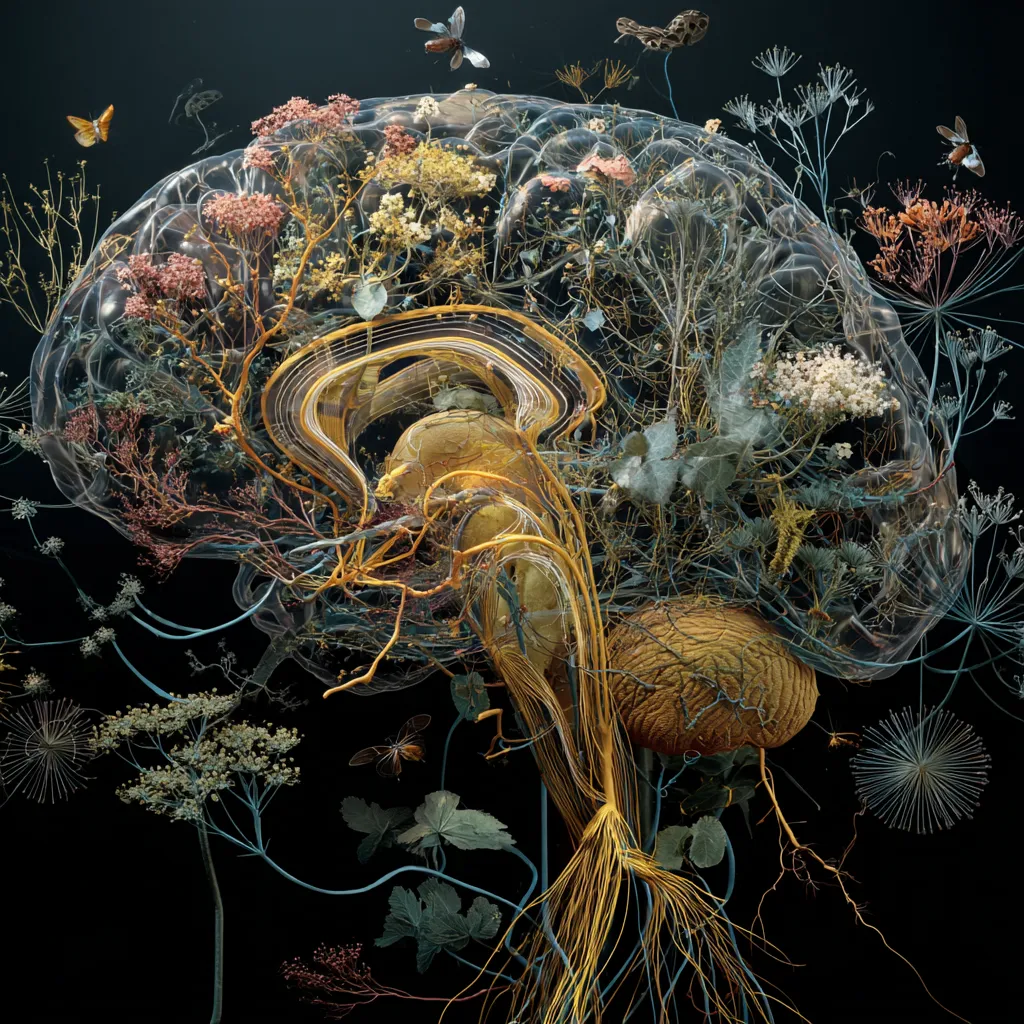
To neurotypicals, autistic sensory perception is genuinely alien. I don't mean this as hyperbole. I mean they literally cannot conceive of what it's like. Sounds have textures for me. Certain frequencies feel like sandpaper scraped across my brain. I react the same way to a leafblower as many animals do to vacuum cleaners (and leafblowers) . I notice micro-behaviors of others and sometimes this can cause actual physical pain. I’ve been called overly sensitive so many times. In autistic people, it is more often than not explained in these terms, but at different times, this can be a superpower too.
My dogs and I are experiencing reality at a level of sensory intensity that the neurotypical world considers either irrelevant or imaginary. I can not say how many times I told my ex I could smell people in the woods, or felt heat coming off a tree. This is why autistics form such profound bonds with animals. We actually understand each other. We're speaking a similar language of direct sensory experience. Since we can’t filter, this can also lead to overwhelm.
And we both know what it feels like to be misunderstood. To have our perception constantly overruled. For autistic kids, it's ABA therapy, which is based on literally the same behavioral conditioning principles used in dog training.
Both were developed from B.F. Skinner's miserable work. Both treat the subject as less than human. Suppress your stimming. Make eye contact even though it hurts. Ignore your sensory overload. The method doesn't matter, force, rewards or treats, it's all conditioning. It's all nonsense.
This is why the bond between autistic people and animals goes so deep. My dogs don't need me to perform like a normal human being. They don't care that certain social situations make me want to scream. They just see me as I actually am, and that's enough.
And I see them the same way. When Mahru says no to something, I trust her. I don't override her perception because mine is supposedly superior. I have no idea what I am doing half of the time anyway. This is the only relationship in my life that makes complete sense.
Neurotypicals don't understand this. They think I've trained my dogs well, but completely miss that there's no training at all, it’s just understanding.
So when my ex told my therapist that my dogs were the only thing keeping me safe, the only thing preventing my suicide, she was accidentally telling the truth. But because they were the only beings in my life who accepted me without demanding I become someone else first.
Then she took them.
What she actually did was take away the only beings who saw me clearly and didn't decide I was broken. I hope I see them again. I hope they remember me. I hope they're okay.
But mostly, I hope they know I didn't leave them. That I would never leave them. That they're my pack, and that matters more than anything else in this incomprehensible world.
My fight will continue…
A short movie of Mahru at the market. Normally we spend our days in the woods but every Sunday we go the market.
Newsletter
Get essays in your inbox
New essays, no noise. Free, always.