A Sorry Piece of Meat
(update for results see bottom of the article)
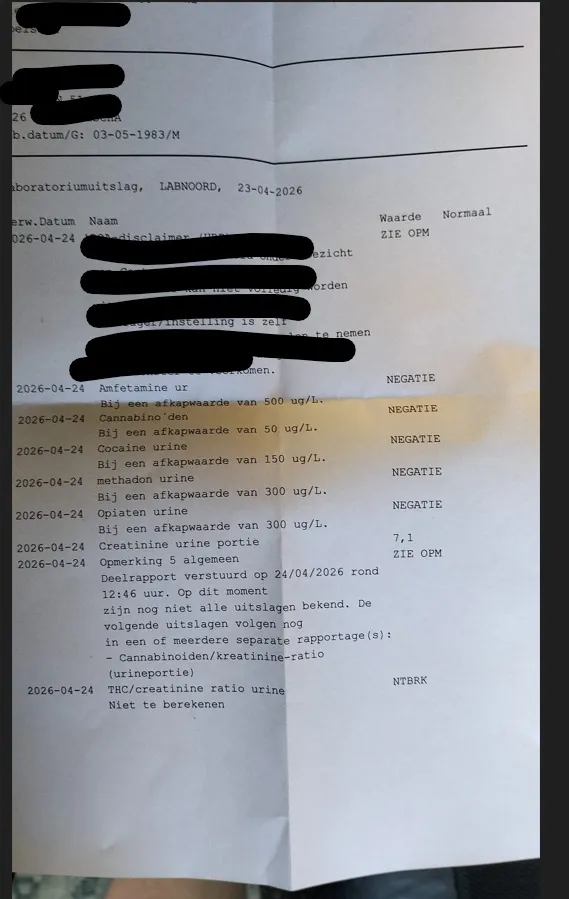
Today I went to the hospital to prove that I do not take drugs.
It is quite humiliating, being forced to confirm the absence of a thing. My body becomes evidence; my soul is put on trial. So I found myself in a small office explaining my predicament to a young woman who listened carefully and was, luckily, very understanding. Before the test, she apologized for having to pat me down.
I told her it was fine. It was not fine, really, but it was not her fault. I had chosen to be there. I had chosen this.
I had chosen to prove a negative, which is not how the law is supposed to work. But here I was, feeling shit
So, this is where the story ends… for now, at least. To understand how it began, let’s go back a few weeks.
I
In March of 2026, two women told the police, among other things, that I was consuming enormous amounts of substances every day and was a danger to those around me. I was not asked about this by anyone. I barely know these people at all.
On the first of April, at 5:30 in the morning, the police stormed my house.
An officer named Wim Veldkamp pointed a weapon at me while his colleague Sander Frieswijk tried to wrestle me to the ground. I explained that I have autism and asked to contact my support person, who is always available, that was in fact their trigger to become violent.
There is substantial research showing that police officers here in the Netherlands are poorly equipped to deal with anyone who behaves a little differently. They tend to treat anything “out of context” as suspicious.
In my case, Veldkamp and Frieswijk treated my autism as a justification for violence. A Dutch police officer, Bas Böing, recently completed his doctoral research at the University of Twente on exactly this problem. A paper titled “Discussing the Elephant in the Room”, in which he divides officers into four categories: “Don’t Care,” “Don’t Know,” “Don’t Dare,” and “Don’t Want.” Frieswijk and Veldkamp, I think, fall squarely into the first.
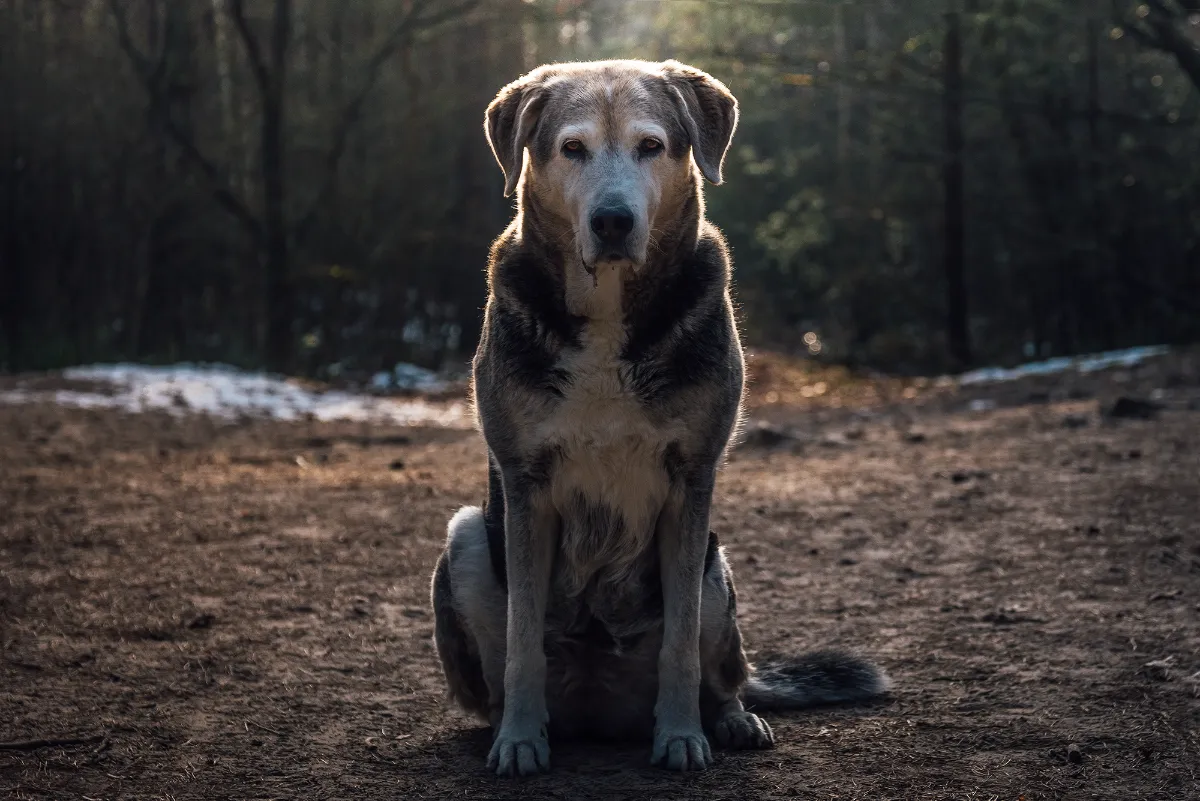
My dogs, one twelve years old for goodness sake, one five months old, were terrified. I was terrified too: partly for myself, and mostly because police officers often shoot dogs who try to protect their humans. Based on my experience with these people, I should assume they would have shot both Mahru and Roek.
The latter was given to me by my autism support in order to deal with a late diagnosis.
During the arrest, Veldkamp told me I was “a sorry piece of meat.” Later, when I asked to use the toilet, he told me that people like me normally just use the cell for that.
I was held for twelve hours. For the first hours — while Veldkamp and Frieswijk were still on duty — I was not allowed to contact my doctor and more importantly. For twelve hours I was not allowed to take my medication.
That medication manages my suicidality. It is not optional; it must be taken at the same time every morning. Research from the University of Amsterdam suggests that around 80% of late-diagnosed autistic people struggle with suicidality. Denying that medication was abhorrent.
The officer responsible for this decision was René Zwartjens (Rembertus Johannes Jozef Zwartjens) of the Heerenveen Police Department. I will come back to him. But based on his very religious name, I suspect he does not need proof to believe something.
When I got home after a farcical interview, my youngest dog, Roek, had demolished the house and broken open a window trying to get out. Someone in the street had closed the gate so she couldn’t go further. That small gesture is one of the few decent things I have to report from that day.
II
I should tell you a little about myself.
I have autism and ADHD, this is also known as AuDHD. Both were diagnosed late, which comes with its own particular mixture of grief and relief. The grief is the accumulation of a lifetime of questions. Mainly: Did I throw away my whole life?
I have been assigned an autism support coach and we speak every day, including weekends for seven months now. I see my general practitioner every week. This support structure is immensely important to me. I am genuinely grateful for the support, because navigating the world with a brain like mine is not straightforward at all.
The Dutch TV show Zin made a short film about a young woman dealing with the same things I deal with: burnouts, masking, and the slow destruction of your mental and physical health before the diagnosis. It is in Dutch, but I think English subtitles may be available.
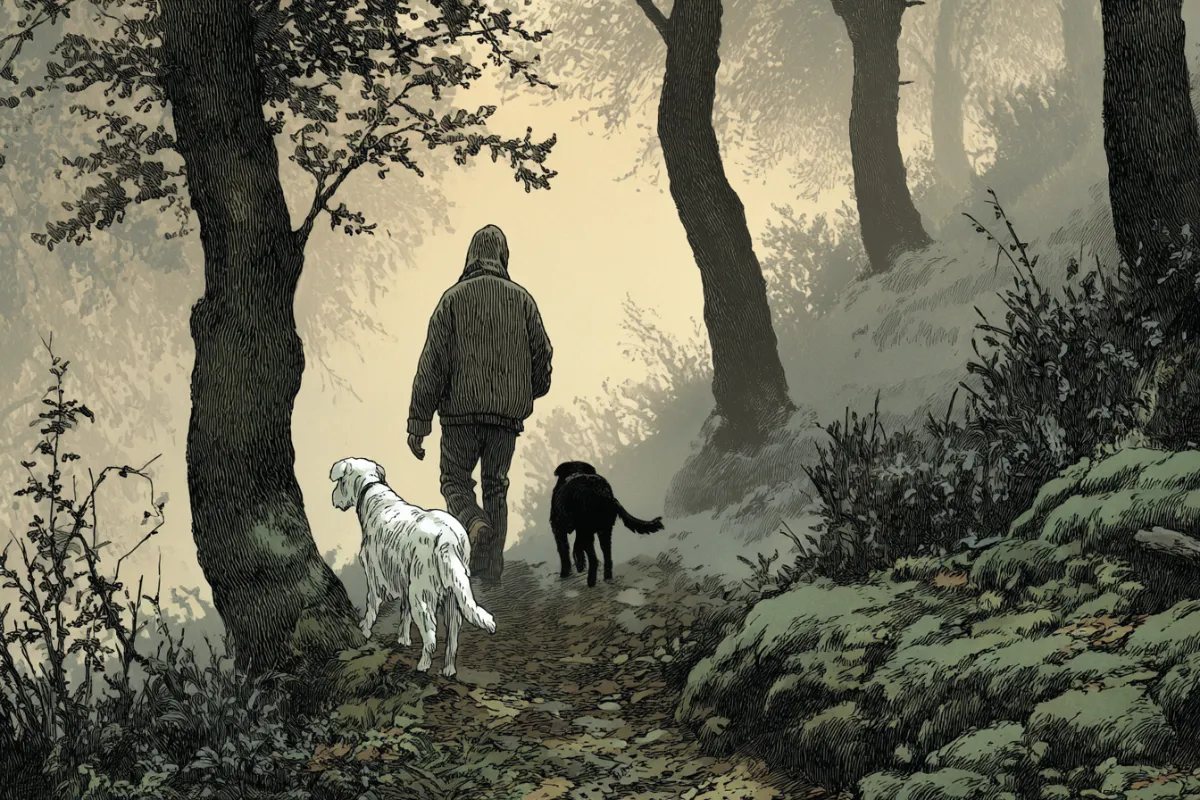
I am not a danger. I am just an idiot with two dogs who farts around in the woods.
III
This brings me to the question: who are the women who made these statements?
One of them, used to be my neighbor until six years ago. I did not like her then. I do not like her now.
The other,, I have never spoken to in person. She describes herself as a dog behavior specialist. I say “describes herself” because it is not an official qualification. Anyone and their mum can call themselves that.
The connection between us is indirect and telling. I used to run two companies in the dog space: CB-Doggy and Aminocalm. I am not a natural entrepreneur and probably the least qualified person alive to own a business. I consider myself an Anarcho-Eco-Communist. Most of the time I am not entirely sure what that means, I am fairly certain it involves not making a profit.
I was also the kind of person who, when asked to write an article about something like TTouch or anti-tick beads, would instead write six pages explaining why it was pseudoscientific nonsense and why people who believed in it probably should not own a dog. This is not a good business model, I admit. My then-partner pointed this out regularly: “You can’t write articles saying your own customers should not own a dog.” She was not wrong.
I was never interested in selling anything. I was just someone who liked walking in the woods with his dog and writing down whatever came to mind along the way. And my dog Jura and I became a bit internet famous because of our extremely long hikes.
At some point, the woman reached out to my then-partner and asked whether I would be willing to write a dog behavior course she could sell. She offered around €1,500, if I remember correctly. I said I would rather drink paint. Because the PDA (Persistent Drive for Autonomy) in me is strong I wrote the course anyway and put it online for free.
So it is perhaps not really surprising that she. told police: “Ik weet dat hij volop drugs gebruikt.” (“I know that he uses a lot of drugs.”) A similar claim was made by the other: “Hij gebruikt veel drugs.” Strong and demeaning statements, from people who had their own reasons for wanting to believe them.
IV
Here is the thing that stays with me.
When people make serious accusations, even the worst investigator in the world is supposed to ask a single, obvious question:
How the f*ck do you know he is taking large amounts of substances?
That is it. One question. Asked of two women who had clear reasons of their own, might have changed everything. Instead, the blue mechanism moved. On a few words uttered by people who either did not know me, or once knew me and resented me, the police mobilized at half past five in the morning.
The failure of police investigator René Zwartjens to ask that question ( or any question, apparently), is something I find just baffling. It would also have been easy to disprove: I have had documented, daily autism support for seven months. That is a paper trail. That is witnesses and stuff. That is a life that does not resemble the one those two women described.
Rumours like these make it almost impossible to rebuild a life. I am still scared when a car slows down outside my house.
V
I have been to the hospital to prove I do not take drugs. I have seen my doctor twice since April. I have multiple appointments with my autism support team to deal with these accusations. The morning is over, but I am still in it, in some way, every day.
The twelve-year-old dog is fine. My autism support puppy is fine.
I’m not fine, but I am working on it.
(Note: I have been working with discriminatie.nl the main institute when it comes to discrimination, but the police is deliberately very slow.)
Sources and sh*t:
https://ris.utwente.nl/ws/portalfiles/portal/512058668/17773_Bas_Boing_Complete_Proef_V3_DRUK.pdf
Occurrence and predictors of lifetime suicidality and suicidal ideation in autistic adults - J van Bentum, M Sijbrandij, M Huibers, S Begeer, 2024
Newsletter
Get essays in your inbox
New essays, no noise. Free, always.