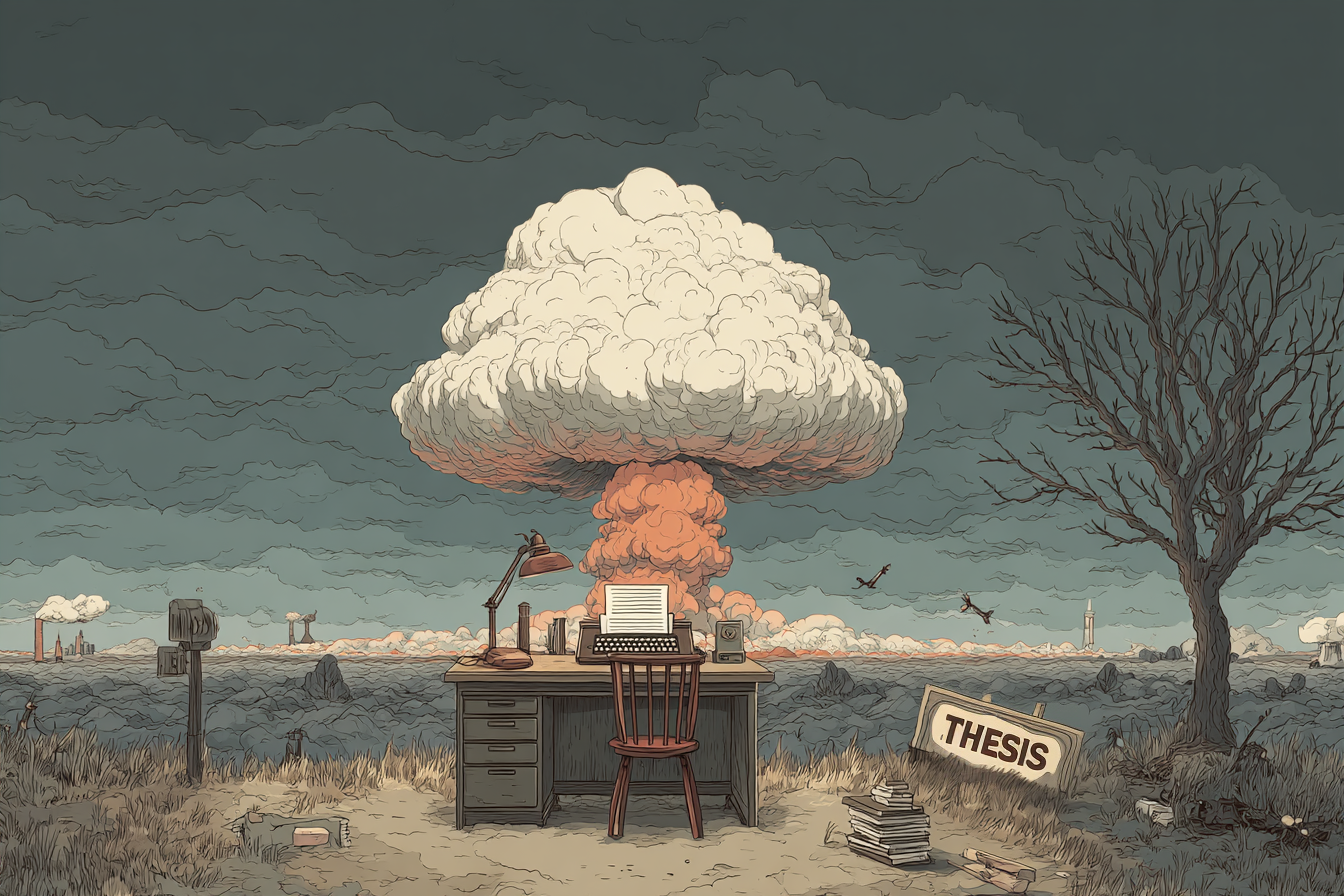
Healthcare Fails Autistic Patients
Today I had an appointment with my local physician. The day before, after years of sustained psychological suffering and a great deal of deliberate reflection, I made a decision that needed formal documentation by a doctor. Of course, the prospect of this appointment left me stressed beyond measure. I considered canceling more than once. Still, aware of the gravity of what I had set in motion, I phoned my doctor to ask whether the consultation could be conducted over the phone instead. Which sounds reasonable I thought.
Being autistic means that environments most people consider normal can be acutely destabilizing. Sitting alone in a waiting room under fluorescent lights is not just a minor inconvenience, in moments of stress it is often paralyzing for me. I can hear the electrical hum in the lighting, and my claustrophobia does not make it any better. So I am always looking for an exit. My flight response during moments like these is overwhelming and prohibits me from functioning properly. This can lead to either a shutdown or a meltdown, either way, it’s bad.
The assistant answered my call. I explained that I was too stressed to attend in person and that it seemed counterproductive to insist on a face-to-face meeting when I would be far too overwhelmed to articulate my thoughts in a meaningful way. So, I suggested a phone consultation so I could at least speak somewhat coherently.
To me, this seemed a practical accommodation.
To her, it was not…
She informed me that, given the seriousness of my request, I was required to appear in person. I replied that the same seriousness was precisely what made attendance not possible, and that my autism causes me to shut down under such conditions, like the infamous Windows blue screen. She dryly answered that choosing not to come was my choice. The logic seemed familiar as though someone with two broken legs had simply opted not to walk.
I asked whether she would at least consult the doctor about calling me at the scheduled time.
The doctor did not…
Later that day, I phoned again to repeat the request. I was told the doctor might be able to call between appointments…
or not…
In the end, I did speak to my doctor, but she was clear: I could only receive help if I came to the practice. For me, this was not possible, so I offered three alternatives: a telephone consultation, a video call, or a house visit. Again, this seemed reasonable to me.
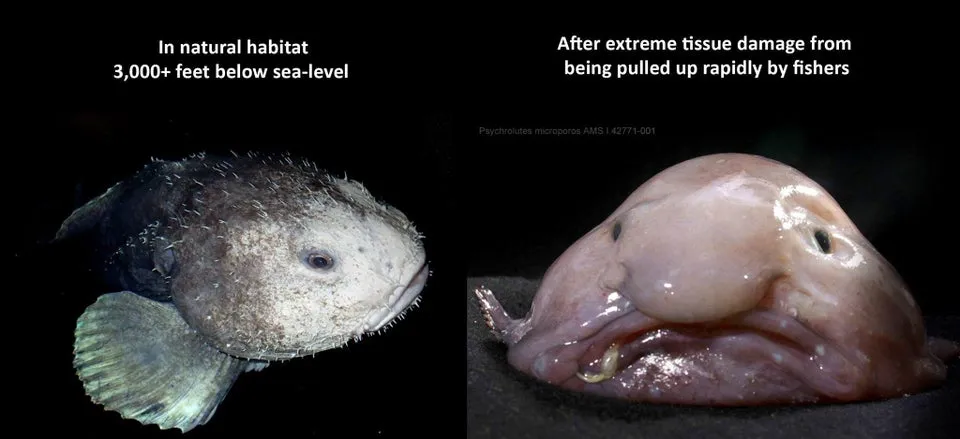
The distance to my doctor's practice is less than 300 meters. Traveling to my house and back would take a couple of minutes at most. I would not have minded if the travel time was billed as part of the consultation. This way, the doctor could see the autistic animal in his natural habitat, and a far better assessment would have been possible. You can't yank a fish out of the water and judge its swimming capabilities - any person with even a tiny bit of scientific understanding grasps this.
My doctor does not…
This is not an isolated incident but representative of systemic failure. And I do urge people to call out their doctors when they are unwilling to accommodate even a little, like mine.
This Is Not Just My Experience
This interaction makes clear why many autistic people do not seek medical care at all, and when they do, (like me) they often fail to receive the care they need. Mary Doherty, founder of Autistic Doctors International, describes it as absolutely shocking that patients are sitting at home with medically serious conditions, unable to access healthcare or even call an ambulance when they desperately need one.
About four out of five autistic patients report significant barriers to accessing primary care
The data confirms what many of us already know from lived experience. About four out of five autistic patients report significant barriers to accessing primary care, including communication difficulties, phone-based booking systems, and sensory issues in clinical environments. More than half of autistic people do not feel understood by their doctors, they experience problems in waiting rooms, and struggle to communicate effectively during appointments.
Again, normally I would not call out people personally or single out specific organizations. But the information I'm presenting has been well known in the autism community for years, and there has been no meaningful improvement (if any). Perhaps doctors aren't reading this research. Perhaps they assume it doesn't apply to them. Maybe they simply don't care.
More and more researchers are publishing articles in open-access journals, making it easier for healthcare providers to access this information. The statistics I'm citing come from freely available resources. At this point, there is so much accessible research that there can be no excuse for remaining so severely out of touch. It. Is. Abhorrent.
The Health Consequences
Researchers at the University of Cambridge examined over 2,600 people across 79 countries and confirmed we are for years: the healthcare system doesn't just underserve us. Doctors actively fails us.
Autistic people report worse healthcare experiences on 50 out of 51 measures
The study, published in Molecular Autism, found that autistic people report worse healthcare experiences on 50 out of 51 measures. You do not have to understand statistics to understand that this is a systemic pattern of failure.
Autistic participants were far more likely to say they couldn't explain what their pain feels like, couldn't make their symptoms understandable to a doctor, couldn't understand what the doctor was saying in return, and didn't know what was expected of them in appointments.
You are trying to get help and you and the doctor across from you are speaking different languages, but you're the one being graded on comprehension. That's what a doctor's appointment feels like for many of us.
We are seven times more likely to experience sensory overload during appointments. Four times more likely to have meltdowns or shutdowns over ordinary healthcare logistics, like booking an appointment. Three times more likely to leave a clinic feeling we received absolutely no help.
And that's just the experience of seeking care.
The health outcomes are even worse. Autistic adults face elevated rates of chronic physical and mental conditions: arthritis, neurological issues, breathing problems, anorexia, anxiety, ADHD, bipolar disorder, depression, insomnia, OCD, PTSD, self-harm. And the list goes on and on.
Autistic people experience premature mortality
Autistic people experience premature mortality, with life expectancy potentially reduced by 16–30 years. (note: this statistic changes drastically in areas with better healthcare and there are many studies on this) We face increased mortality across almost all diagnostic categories. In-hospital mortality is elevated. Autistic people are more than twice as likely to use emergency departments and to die after attending emergency care, and three times as likely to require inpatient admission. Most of this can be explained by poor access to healthcare and poor understanding.
Dr. Elizabeth Weir describes this as a wake-up call, stating that healthcare systems are failing at basic and fundamental needs. People are falling through the cracks and nobody cares.
Other team members, including Professor Sir Simon Baron-Cohen, call these insights an important step and say more research is needed. Which is true. But it feels a bit late… Autistic adults have been describing these barriers for decades. We have been dying because of inadequate healthcare access while researchers publish papers calling for more research.
What Good Autism-Friendly Healthcare Looks Like
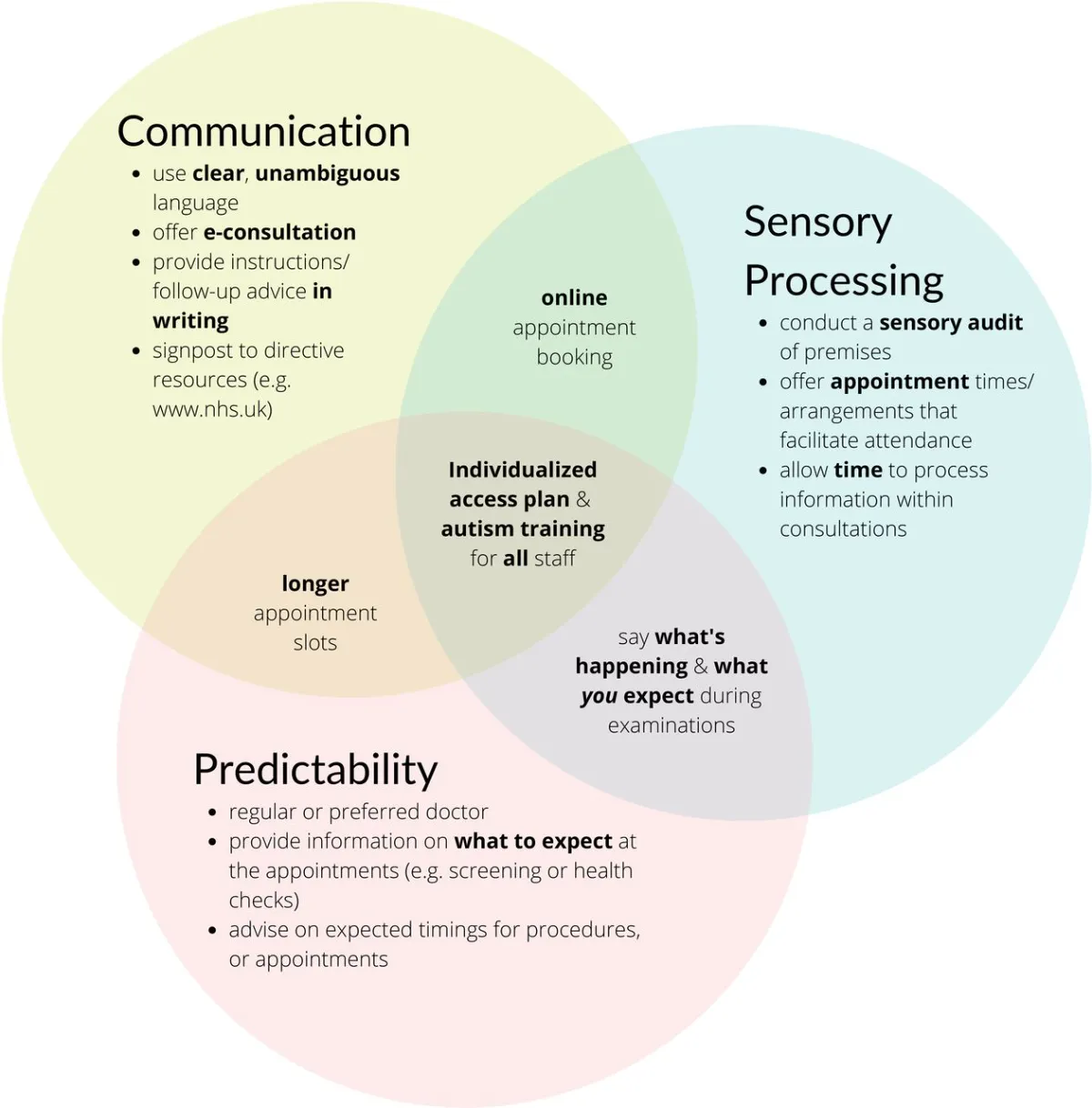
Accommodations are not complicated. They are not expensive. They are often already standard practice in other contexts. No doctor will ask you to come in with two broken legs.
What I think autism-friendly looks like.
Flexible consultation formats: Phone or video appointments for patients who request them (like me), especially for consultations that are primarily verbal rather than requiring physical examination.
Sensory accommodations: Quiet waiting areas with softer lighting, or the option to wait outside or in a car until the appointment time. Some practices send a text message when the doctor is ready, eliminating waiting room time entirely.
Clear communication protocols: Written appointment summaries sent afterward. Visual aids or written instructions for treatment plans. Advance notice about what to expect during the appointment.
Scheduling accommodations: First or last appointments of the day to minimize waiting room exposure. Longer appointment slots for patients who need extra time to process information and communicate.
Home visits when appropriate: Especially for patients living nearby, when the medical concern doesn't require specialized equipment, and when the patient's environment would actually improve assessment quality.
These do not sound radical to me. Some, like home visits for nearby patients with serious access barriers, are both medically sound and ethically necessary. It is even irresponsible to assess someone in a complete unnatural situation.
Accountability Starts With Individual Practitioners
I appreciate research like the Cambridge study immensely. But research papers cannot hold individual healthcare providers accountable. That responsibility is on us, autistic patients. When your doctor refuses to accommodate reasonably, do not be silent about it.
Dr. Hummel and her assistant told me that it was my personal choice to not come to the practice. The real choice is the choice each healthcare provider makes when an autistic patient asks for help.
Currently, I only have a physician on paper, but in practice, I do not have full access to healthcare.
Sources
Barriers to healthcare and self-reported adverse outcomes for autistic adults: a cross-sectional study | BMJ Open
Autistic adults have poorer quality healthcare and worse health based on self-report data | Molecular Autism | Springer Nature Link
Premature mortality in autism spectrum disorder | The British Journal of Psychiatry | Cambridge Core
Autism is the company that brought you (probably) Isaac Newton, Albert Einstein, Franz Kafka, Emily Dickinson, Simone Weil, Michelangelo, Ludwig Wittgenstein, Immanuel Kant (we’re sorry for that), Alan Turing and many more.
Statement: No AI, or monkeys with typewriters were used - my articles are peer reviewed by Kung-fu panda Mahru and Sir Harry von Cattington.
Newsletter
Get essays in your inbox
New essays, no noise. Free, always.